

Reed Kaplan, MDCM’78, believes that McGill – and Canada – opened up new horizons for him. The American neuropsychiatrist and neurologist is hoping to do the same for generations of young Canadians enrolled in McGill’s MDCM-PhD program.
Dr. Kaplan was the driving force behind the creation of the Reed and Jennifer Kaplan Family Trust Award for Clinician Scientists, which provides funding to promising students in the MDCM-PhD program to support their research efforts. Only Canadian citizens can receive the award – and Kaplan says that was very much intentional.
“I’ve always wanted to thank the Canadian people for welcoming me and supporting me. I’ve had a great life and a great career, and the education and training I received at McGill played a large part in that,” says Kaplan. “I wanted to give something back that reflected my gratitude and furthered the promise of McGill.”
When Kaplan first arrived at the University, he didn’t expect the experience would be quite so transformative.
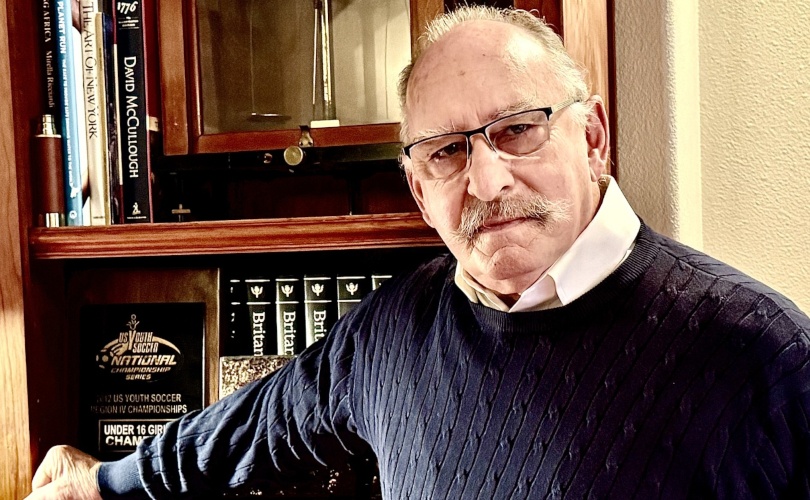
Dr. Reed Kaplan
He had just completed an undergraduate degree in psychology at the City College of New York and wasn’t sure what to do next. A couple of close friends were headed to McGill to do graduate studies in clinical psychology. “They invited me to Montreal to have a look around and see how I liked it. I had been to the city before and I thought it was wonderful.”
Once he was in Montreal, he decided to prolong his stay.
“I walked into [McGill’s] Department of Psychology, somewhat audaciously, if not naively, and asked if there was any work available.”
His timing was good. “I was offered two wonderful positions. One was in the lab of Professor Dalbir Bindra. And then, Donald Hebb, who was a giant in physiological psychology, offered me a job as a teaching assistant for his introductory psychology course. That began a fantastic two years where I learned how to do bench science and how to teach,” says Kaplan.
“Dr. Hebb took a liking to me and became a mentor. He convinced me that my future was in medicine, not psychology. He read me well. He helped create the very basis of my understanding of brain function and disease process.”
Hebb encouraged Kaplan to attend seminars at The Neuro where he had a chance to listen to ground-breaking medical scientists like Wilder Penfield, Brenda Milner, Peter Milner, Frederick Andermann, and Pierre Gloor.
“It all fascinated me,” says Kaplan, “and I became deeply, deeply interested in the application of biology and neurology and neuroscience to psychiatry. I went to medical school at McGill with [Hebb’s] blessings and encouragement.”
As a student, Kaplan remembers visiting the Rutherford Museum, which included some of the tools that Nobel laureate Ernest Rutherford used when he was doing his pioneering work at McGill. “I liked to study there. I found it inspiring.
“There was a wonderful minister at McGill, Stanley Kennedy. We would have breakfast on Friday mornings to talk about how things were going for me at medical school. This was another person at McGill who wanted to see me thrive.” Kennedy helped arrange for Kaplan to do an externship in tropical medicine in Kenya. “It was a life-changing experience.”
Even years after he graduated, Kaplan says his McGill ties continued to pay dividends. A former classmate alerted him to an intriguing opportunity in her old hometown and thanks, in part, to his experience with emergency medicine as part of his training at McGill, he ended up overseeing medical services for the 1980 Lake Placid Winter Olympics. “One of the many incredible experiences I had as a result of my McGill association,” says Kaplan.
Kaplan earned a Wilder Penfield Fellowship and did a residency in neurology and neurosurgery at The Neuro. Once that was done, he moved to the Bay Area in California and began a long relationship with Stanford University, first as a fellow and resident in psychiatry. He went on to serve as a medical director of the Stanford University School of Medicine. He launched his own behavioral neurology and neuropsychiatry practice 40 years ago, but remained involved at Stanford, teaching and participating in research.
“Stanford is a remarkable institution, but it is not McGill,” says Kaplan. “McGill was top-notch, but it was a much warmer, more generous, more welcoming place. You felt that there were people there looking out for you who really cared about your education.”
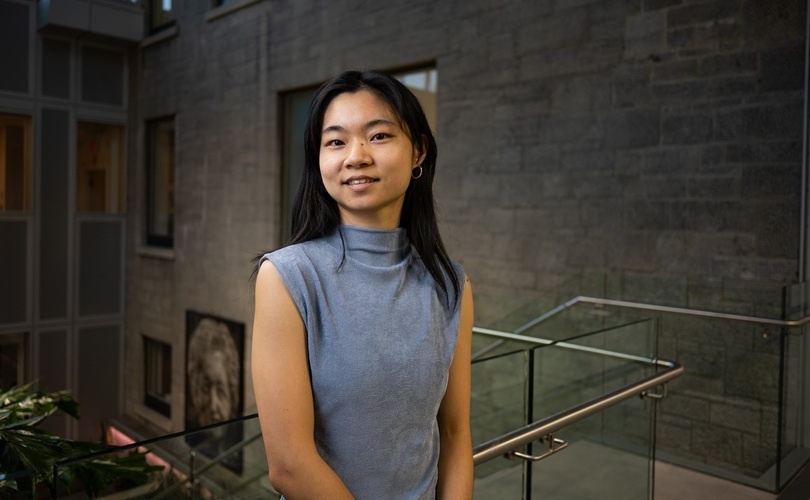
Yigu Zhou is the first recipient of the Reed and Jennifer Kaplan Family Trust Award for Clinician Scientists
Kaplan has never met Yigu Zhou, BSc’23, but, in a sense, he is looking out for her the way others looked out for him at McGill. Zhou is the first recipient of the Reed and Jennifer Kaplan Family Trust Award for Clinician Scientists.
“It’s actually the first time I’ve ever received such a huge award,” says Zhou. “My mother has a master’s degree, but I’m the first person in my family to pursue [an academic career]. This is a great encouragement.”
Zhou’s research focuses on data analysis. “I really wanted to understand how medical images are being analyzed, because there are a whole bunch of biases in the way that we map data onto human anatomy. And we know that human anatomy is individual specific. So, the conclusions that we draw from these statistical analyses could bias the way we take care of certain kinds of populations just because their anatomy is slightly different.”
The Kaplan Family Trust Award will allow her to spend more focused time on her research.
“Some of us have to work part-time jobs,” says Zhou. “I have the privilege of not needing to do that this year.”
Kaplan says the new award is linked to the MDCM-PhD program because of its emphasis on research.
“When I was in Kenya in the 1970s and at other times since, I’ve seen a lot of disease, malnutrition, and suffering that could have been treated more effectively if there had been better access to [medical technology]. One should always be looking for ways to make things better.
“Sir William Osler was renowned for his insistence on the application of science to medicine and the humane treatment of patients,” says Kaplan, referencing the most influential alumnus of McGill’s medical school. “With McGill’s education and his teachings, I believe [McGill’s] graduates will be able to [be faithful to Osler’s vision], as I believe I have been able to be – thanks to McGill and Canada.”